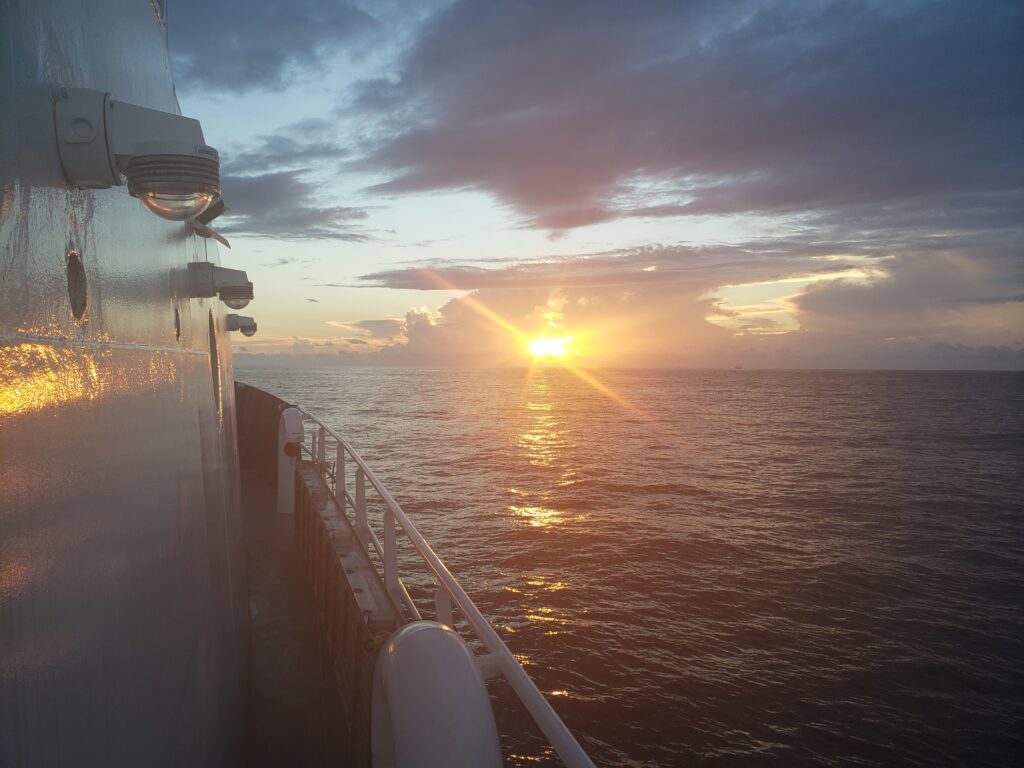

The Greer, Frischer, Brandes, and Treible (Savannah State) research groups just completed a cruise in the South Atlantic Bight (SAB) onboard the RV Savannah. This was the first science cruise of the new DolLAYER project (NSF Grant #2244690), and it was quite a whirlwind getting ready. We deployed a brand new 1/4 m MOCNESS (Multiple Opening and Closing Environmental Sensing System, NSF Grant #2315030), along with many other instruments, ultimately collecting a dataset that should reveal how vertical structure influences ocean food webs on the SAB continental shelf. Below are some of the instruments we deployed, along with a brief description of they tell us about the environment these small animals (zooplankton) are experiencing.
The first step before departing was getting the MOCNESS ready and learning how to deploy it. Here is creator of the MOCNESS, Erich Horgan (second from the right), teaching us how to put the nets on and other features of the instrument. On the far right (and pictured further below) is Royhan Agostine from Scripps Institution of Oceanography, who came out with us on the cruise to teach everyone how to work the MOCNESS software, set the nets, and troubleshoot any issues. 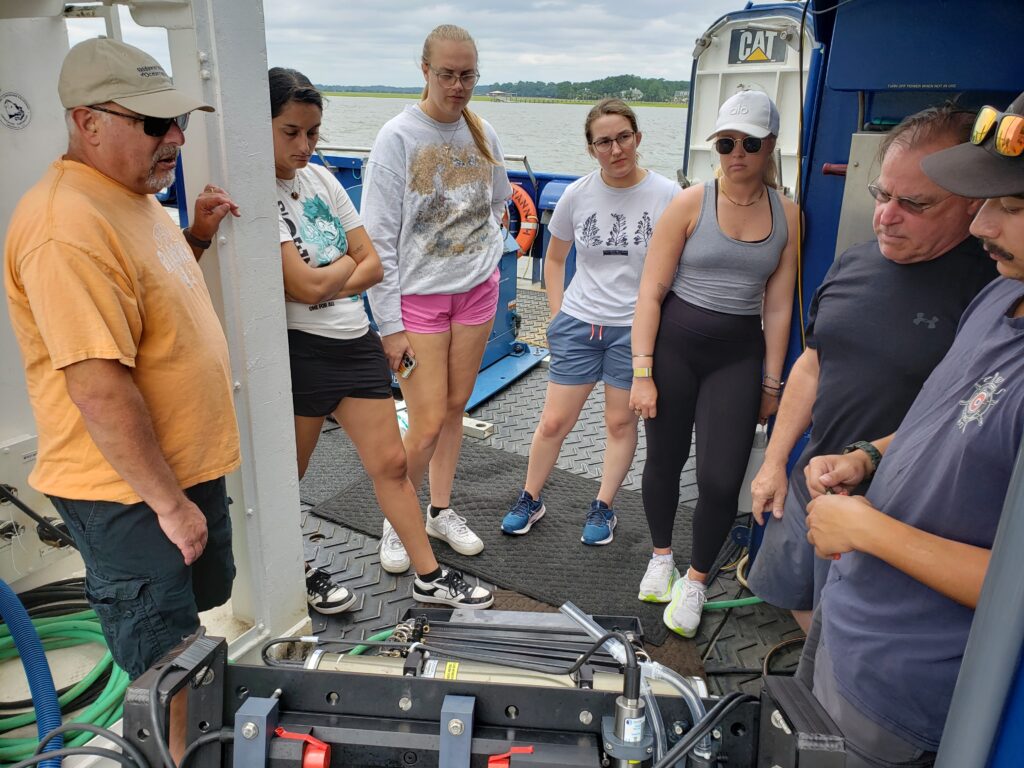
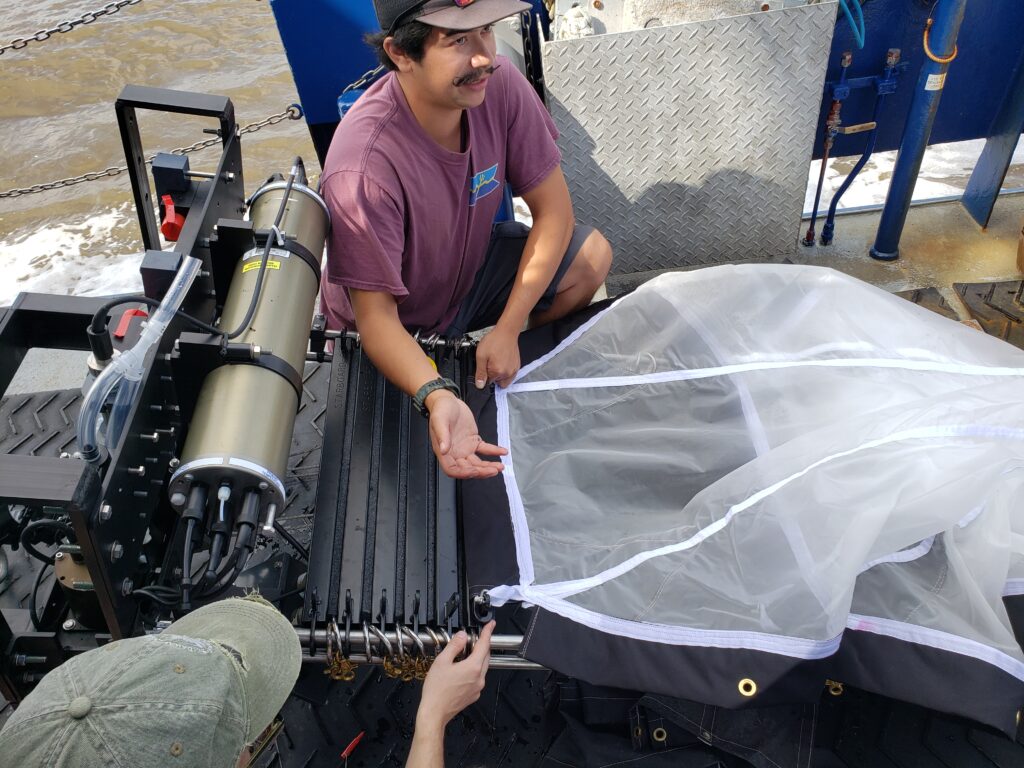
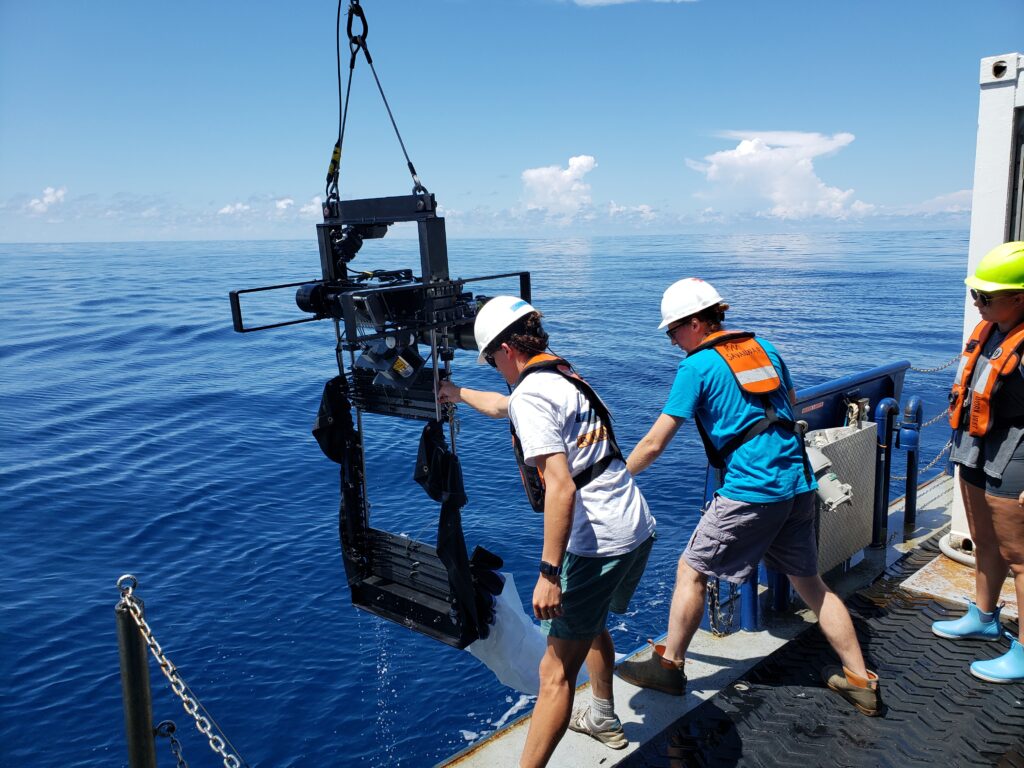
The MOCNESS may look like a complex instrument, but its function is relatively simple, which is a major strength because it is robust. The system allows us to capture zooplankton at specific depths while collecting high resolution oceanographic data. This give us an idea of the environment that each net sampled. Each plankton net is “tripped” at different depths to close, thus ensuring that everything you caught was in that particular depth range. We get a live feed of the sensors on the net and its position in the water column. Below is a picture of the net being recovered, so all of the nets have been tripped and closed. As you can see, it was a beautiful and calm day.
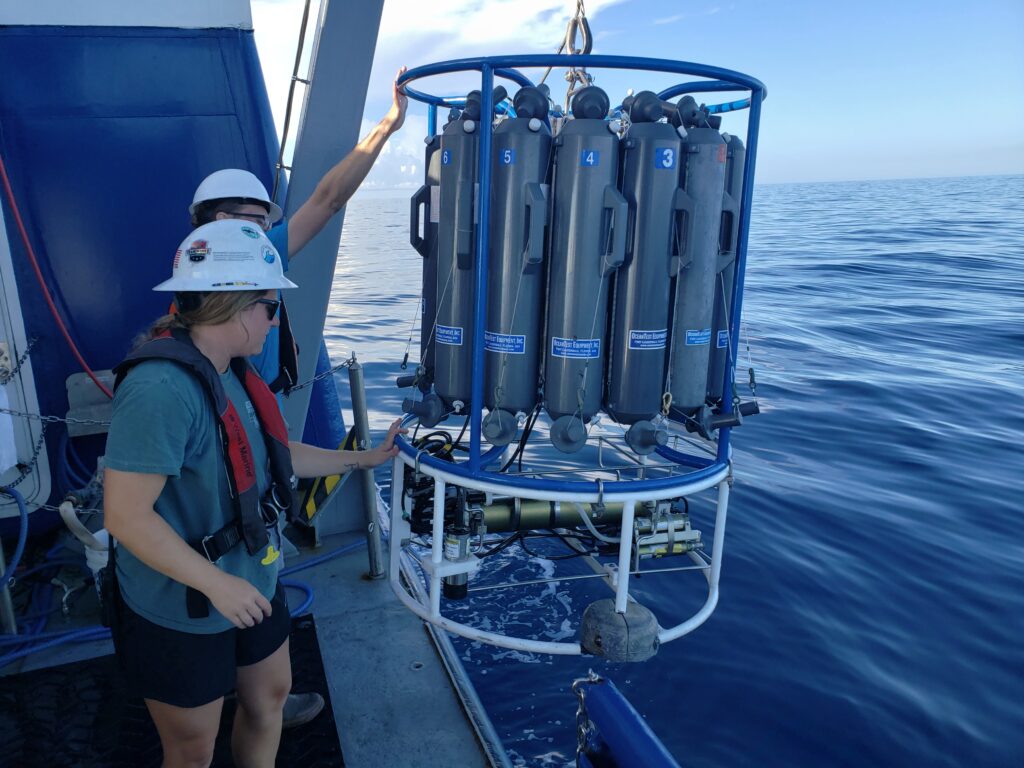
Another instrument we deploy at sea is called the CTD. That stands for Conductivity (which is how you measure salinity), Temperature, and Depth. The CTD produces a vertical profile of all the different oceanographic variables at a particular sampling station, which allows us to see if the water column is structured or well mixed. The wheel of gray bottles can be fired at different depths to collect water and look at primary productivity and the composition of the microbes.
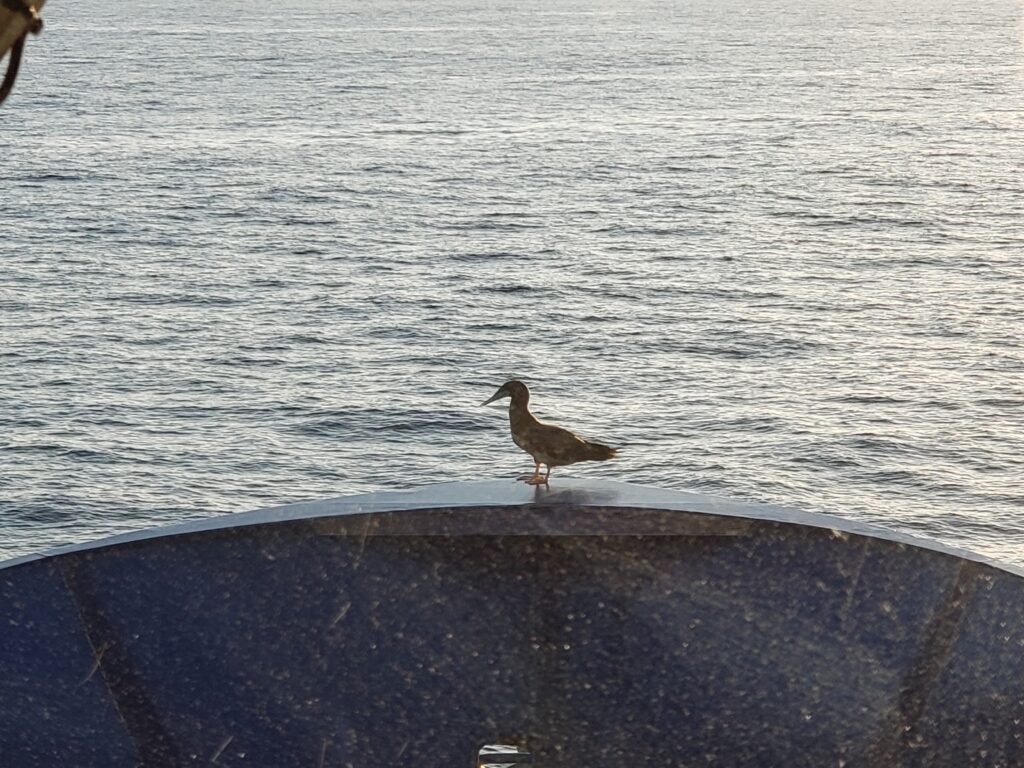
We also see a lot of wildlife out there. Dolphins followed us day and night, and you can hear their little squeaks when you are below the main deck of the ship (their squeaks/clicks from echolocation must make the ship vibrate a little bit). Here is a picture of a brown booby, which is a type of seabird you will not find at the beach. It lives pretty far offshore, but it took a little rest by perching of the bow of the RV Savannah.
Overall, the cruise was a success. Although we did not find a bloom of doliolids, there was quite a bit of vertical structure in the water column. This was a bit surprising because the weather prior to the cruise was very windy, which we thought might mix up the entire water column. We also saw high abundances of different zooplankton groups, and we look forward to examining what they were eating, and how it related to all of the detailed information we gathered from our instruments. We will go out again in November when the water column should be really mixed up!