

A new study offers fresh insight into how chromium isotopes behave in aquatic environments like the Chesapeake Bay, where oxygen levels change with depth. The findings challenge how previous studies have used chromium trapped in sediment as a chemical fingerprint to infer oxygen levels in ancient oceans.
The study found that chromium isotopes change as water oxygen levels decrease. As a result, chromium in oxygen-rich surface waters differs from chromium found near the sediment at the bottom of an oxygen-stratified system. This matters because it suggests the chromium trapped in the sediment may not fully represent oxygen levels throughout the water column. Therefore, additional indicators are required alongside chromium isotopes as tracers to better understand chromium cycling in ancient oceans.
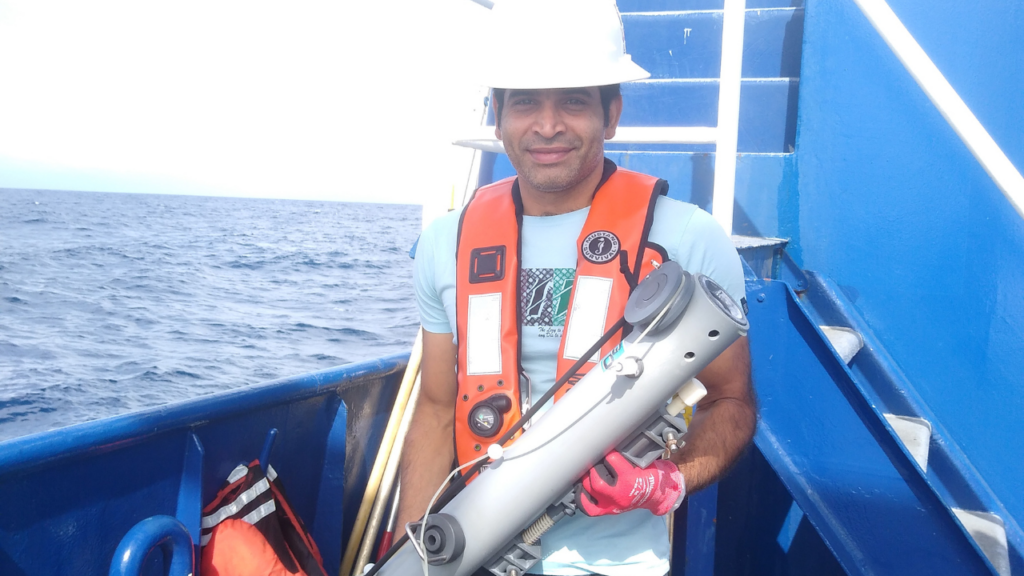
“Chromium isotopes preserved in seafloor sediments may not tell the full story on their own,” said Dr. Debbrota Mallick, lead author of the study and a postdoctoral researcher in co-author Dr. Dan Ohnemus’ lab at the University of Georgia Skidaway Institute of Oceanography.
The Chesapeake Bay is somewhat unique in that it is split up into layers with various oxygen levels. Surface waters are rich in oxygen. Near the bottom, however, there is little to no oxygen at all. This serves as a proxy for ancient oceans, which had a similar structural makeup.
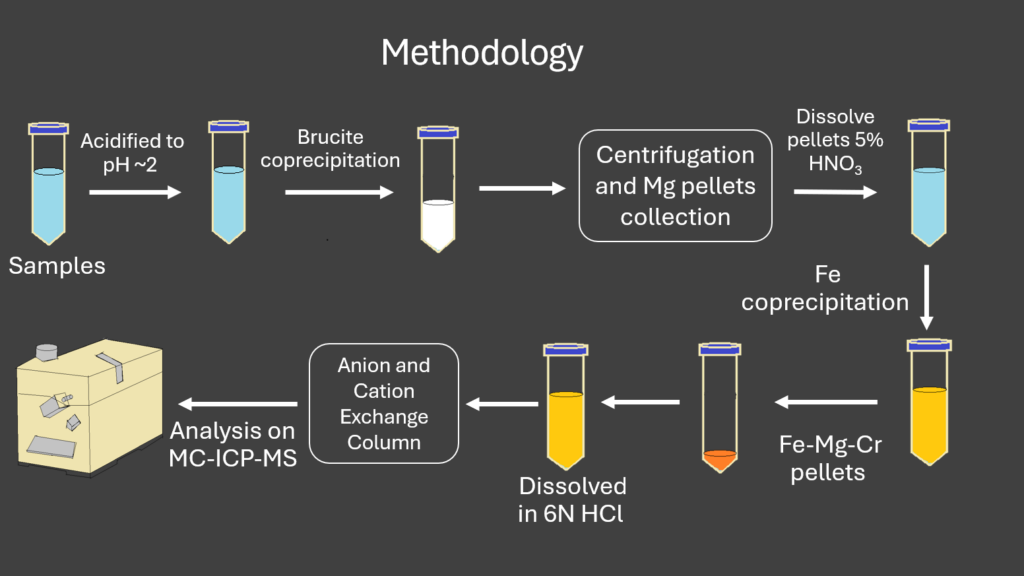
To study the changes, Mallick gathered Chesapeake Bay water samples across various depths and analyzed their chromium isotope ratios. This allowed him to track how chromium transformed as it moved from oxygen-rich surface waters to oxygen-depleted bottom waters.
The full paper, titled “Chromium isotope fractionation in the redox-stratified Chesapeake Bay” is published in the journal Applied Geochemistry.
The research was funded by NASA, the National Science Foundation (NSF), and the Agouron Institute. Additional support for ship time came from NSF grants.
About SkIO
The UGA Skidaway Institute of Oceanography (SkIO) is a multidisciplinary research and education institution located on Skidaway Island near Savannah, Georgia. The Institute was founded in 1967 with a mission to conduct research in all fields of oceanography. In 2013, SkIO was merged with the University of Georgia. The campus serves as a gateway to coastal and marine environments for programs throughout the University System. The Institute’s primary goals are to further the understanding of marine and environmental processes, conduct leading-edge research on coastal and marine systems, and train tomorrow’s scientists.