

During the last week of March, faculty, staff, and students attended the Aquatic Sciences Meeting in Charlotte, NC to present research from the DolMICROBE project (and some preliminary findings from DolLAYER). I (Adam) had a front row seat for most of the talks by our group. It was great to see the students presenting their work to scientists from all over the world who gathered to discuss recent findings in marine and freshwater ecosystems. Here are some photos I took and a brief description of some of the research results from each Doliolideer. (Doliolid + “musketeer” grappling with complicated oceanographic datasets = Doliolideer)
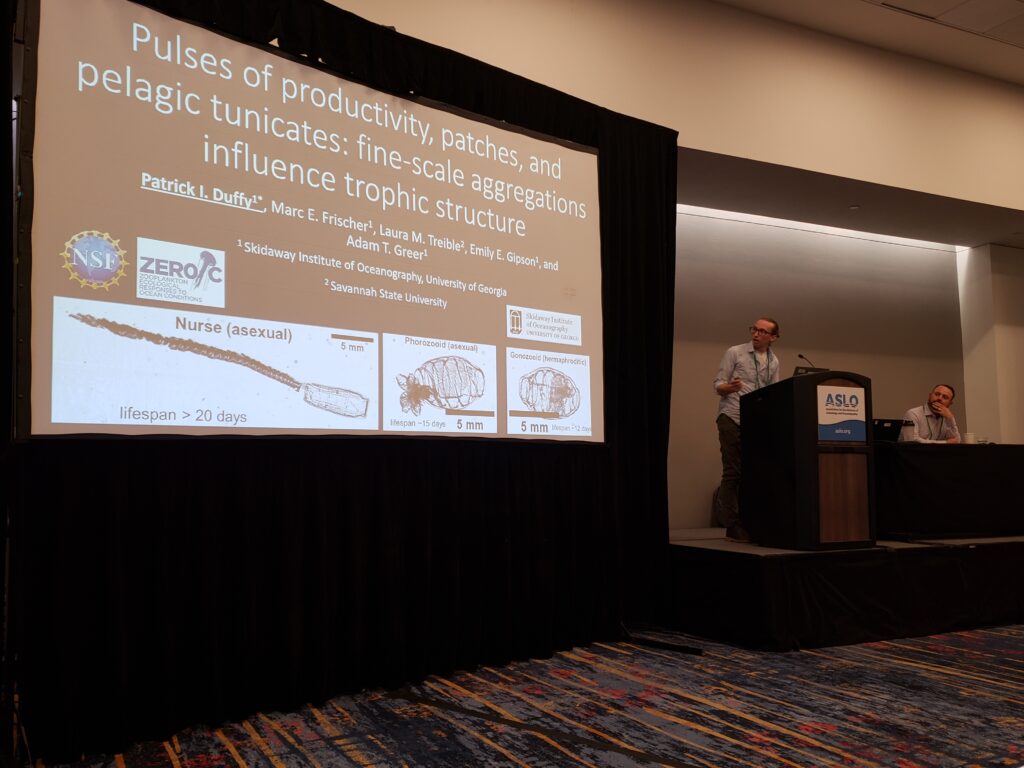
Below is a picture of PhD student Patrick Duffy highlighting new results about how the fine-scale distribution of doliolids might connect to microbial processes. He mostly analyzed data from summer 2021 but is starting to dig into summer data from 2022 and 2023 to compare and see if there are differences in oceanography and other variables we measured.
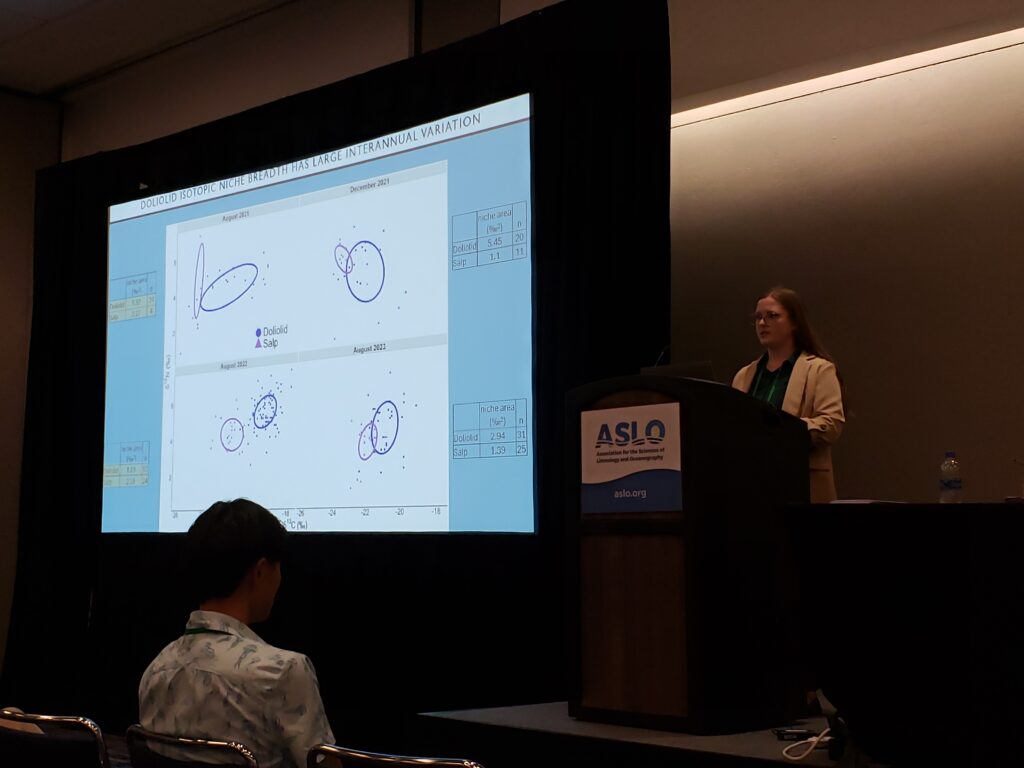
PhD student Emily Gipson presented results about how the role of doliolids in the food web (based on stable isotope analyses) might change depending on oceanographic conditions in the summertime. She presented data from our ~2-week long summer cruises in 2021, 2022, and 2023.
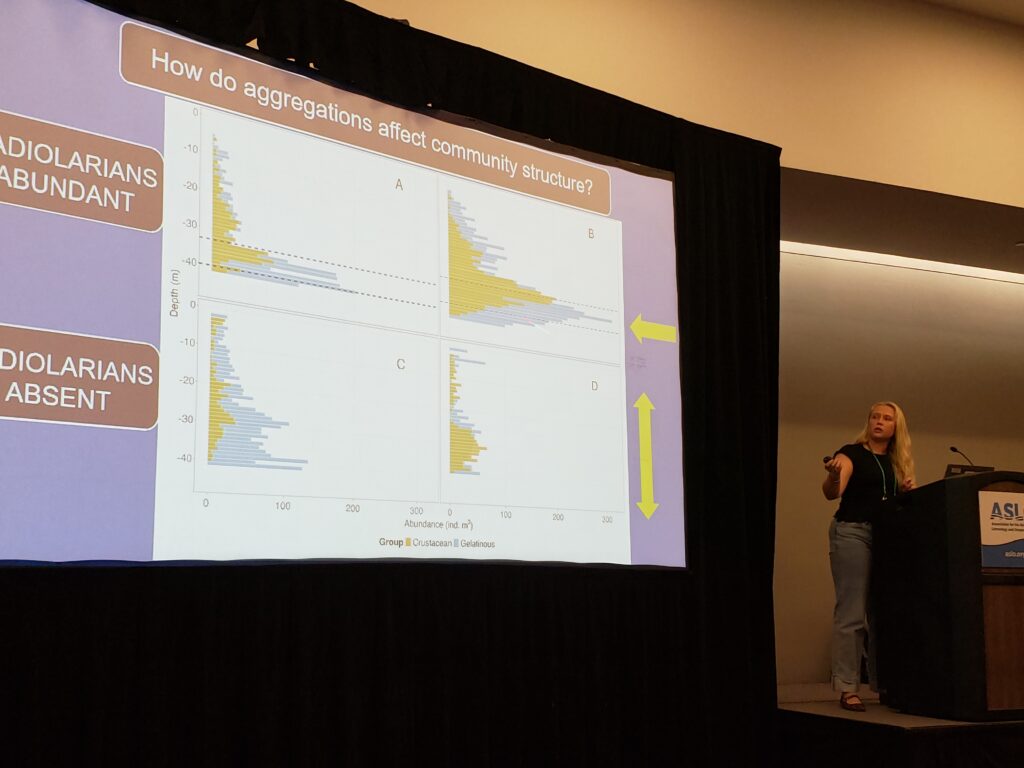
Master’s student Grace Mann presented some results about the causes and consequences of radiolarian blooms on the South Atlantic Bight shelf. Radiolarians are colonial organisms can be several cm in length, and the type we are studying (Collodaria) host symbiotic algae. Very little is known about them, particularly on the shelf because they quite fragile and difficult to sample. Imaging is potentially a great way to understand how they arrive on the shelf, as well as the consequences for the zooplankton communities nearby.
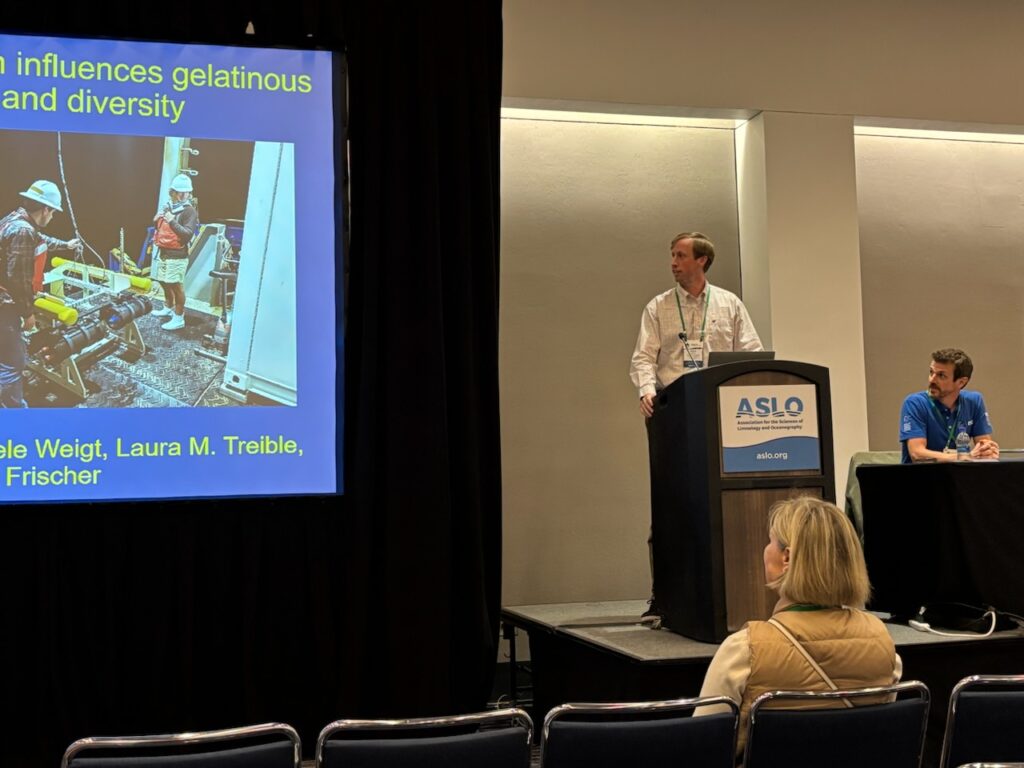
And here’s me talking about a hodgepodge of different results relevant to the overarching research questions in DolLAYER. Thanks to Dr. Marc Frischer for the photo.
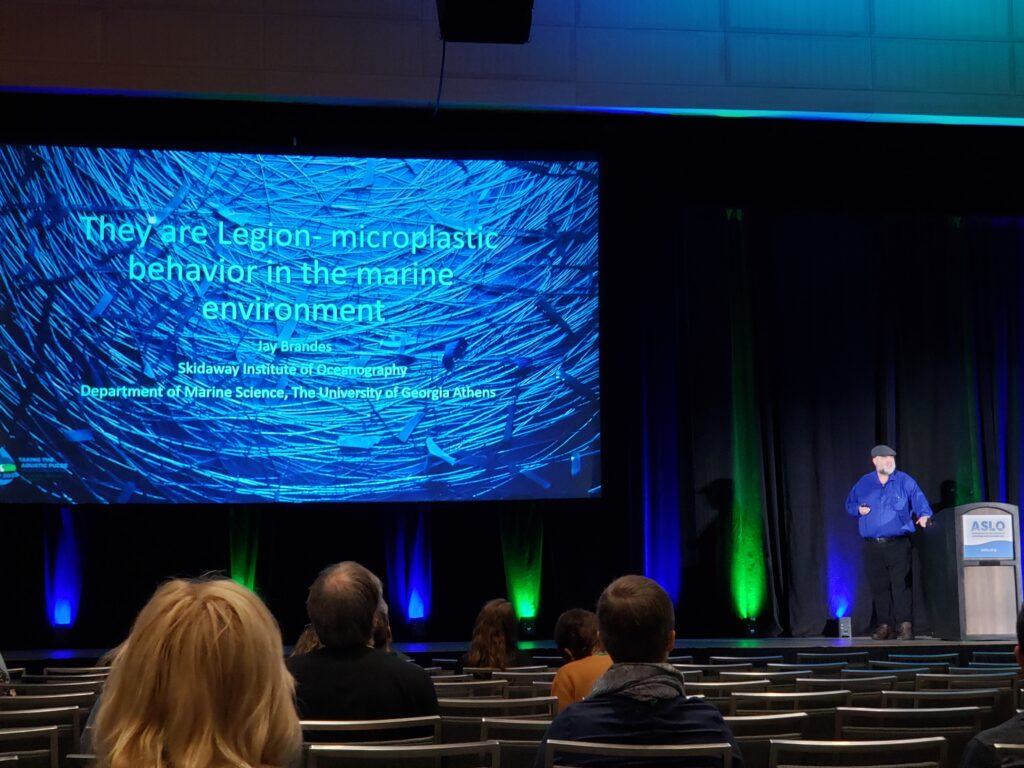
Perhaps the highlight of the conference was Dr. Jay Brandes giving a plenary lecture about microplastics. This is not necessarily related to the project goals of DolMICROBE and DolLAYER, but microplastics, their sources (us humans), and where they are transported (due to oceanography), is certainly a fascinating and societally-relevant topic! Dr. Brandes gave a very engaging talk. This photo I think makes him look like a rock star – it’s something about the color coordination between the slides, shirt, and lights.
Dr. Marc Frischer, Dr. Laura Treible, and Alyssa Fritz all presented posters at the conference.
You can see more photos from conference at the ZERO-C Lab Instagram page, including pictures of the poster presenters! Also SkIO’s PR & Communications Coordinator, Jackson Schroeder, wrote an article about the presentations from all of scientists at SkIO (not just the Doliolideers).